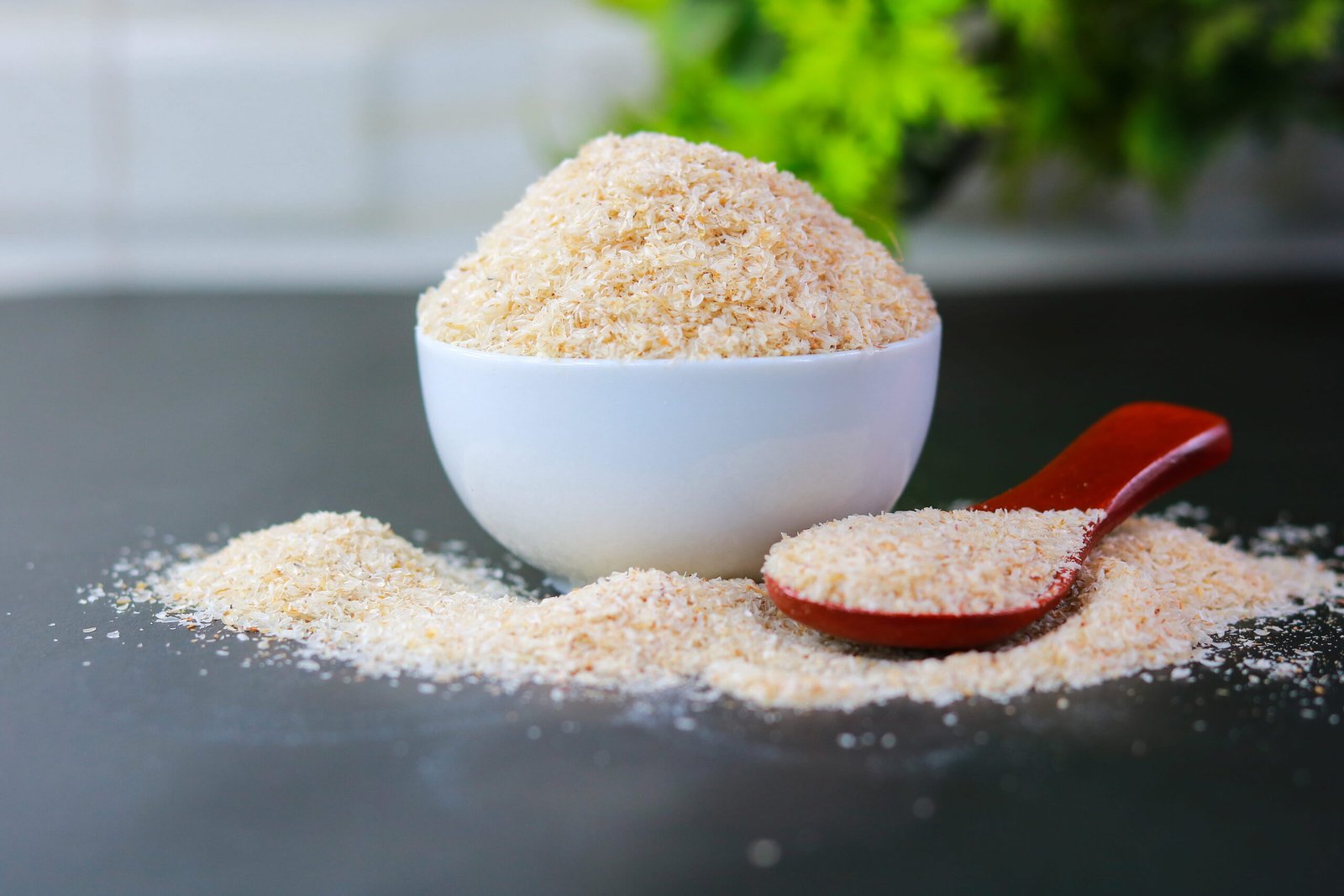
Psyllium husk (Isabgol), the cleaned, dried seed coat of Plantago ovata, has moved from a “digestive health” staple to a strategic functional ingredient across nutraceuticals, pharma, and food manufacturing. As global consumers and formulators pivot toward clean-label fiber solutions, the psyllium category is expanding with estimated global psyllium market at over USD 360 million in 2025.
India is central to this supply chain. Global buyers increasingly source from India not only due to scale, but because consistent quality, process controls, and compliance documentation have become decisive purchase criteria especially in regulated end-markets.
The Three Growth Engines
1. Nutraceuticals and supplements (largest pull)
Psyllium is a preferred soluble fiber for:
- gut-health formulations (regularity, prebiotic positioning)
- cholesterol and metabolic health support
- weight management products where satiety claims are supported by fiber positioning
2. Pharma and OTC: “quality-by-design” procurement
In pharma and OTC laxative applications, buyers are less price-elastic and more spec-driven. Psyllium is commonly purchased under pharmacopeial expectations (USP/other monographs), where traceability and microbial controls are non-negotiable. The USP definition and compendial positioning matter because buyers use them as an objective reference point for vendor qualification.
3. Functional foods and bakery: reformulation tailwind
Food manufacturers use psyllium for:
- fiber fortification with clean label appeal
- texture and water-binding in bakery and gluten-free formulations
- stabilizing and thickening in select recipes
Whole psyllium husk dominants with over ~70% share owing to broad use across pharma, supplements, and food.
Applications: What Buyers Actually Need
Different end-uses require different performance attributes:
- Capsules / sachets / OTC: swelling capacity, consistent particle size, low microbial counts, tight foreign matter control
- Food-grade fiber: sensory neutrality (color/odor), moisture stability, pesticide residue compliance
- Private label nutraceutical brands: strong documentation pack (COA, allergen, GMO, heavy metals, micro), stable supply and batch-to-batch uniformity
This is why “psyllium” is not a single commodity. The value is increasingly in specification discipline and documentation readiness, not just origin.
Quality Benchmarks: The Specifications Global Buyers Check First
1. Identity and compendial alignment
USP describes psyllium husk as the cleaned, dried seed coat separated from Plantago ovata seeds (often sold as blond/Indian psyllium/ispaghula). For pharma-led customers, alignment with compendial expectations is often used as a gate for supplier approval, including microbial limit requirements.
2. Core physical-chemical benchmarks (industry standard checks)
While exact target limits vary by buyer and application, international procurement commonly evaluates:
- Moisture / loss on drying (storage stability, caking risk)
- Ash / acid-insoluble ash (mineral/soil contamination proxy)
- Mesh/particle size (flowability and uniformity in blending)
- Swell volume / viscosity performance (functional “proof” of quality)
3. Food safety and microbiology: no longer “nice to have”
For EU-facing food ingredients, microbial and pathogen controls are critical. Sector guidance for herbs/spices sold into Europe emphasizes that Salmonella must be absent, reflecting the seriousness of pathogen risk management in dried plant ingredients.
4. Residues and contaminants: pesticide MRL discipline
European compliance is anchored on MRLs (Maximum Residue Levels), the legally permitted maximum pesticide residue level in/on a food product.
For many buyers, the practical requirement is simple: provide validated residue testing against destination-market limits and ensure a defensible sampling/testing protocol.
RNG AGRO EXPORTS: What A “Trusted Supplier” Means in This Category
In psyllium, trust is built less through marketing and more through operational signals. RNG Agro Exports positions itself as a partner for importers and formulators who need repeatable quality and compliance confidence from India:
What serious buyers expect and how RNG Agro Exports is structured to deliver
- Specification-led sourcing: agreed parameters for purity, mesh, moisture, and functional performance aligned to end-use (food vs nutraceutical vs pharma-led needs)
- Compliance-ready documentation: batch COA, microbiology, heavy metals, residue testing; traceability information suitable for buyer QA workflows
- Batch consistency and risk controls: process discipline, foreign matter controls, and shipment hygiene designed to reduce border rejections and customer claims
- Exporter mindset: responsive communication, clear labeling, packaging matched to transit risk, and predictable dispatch execution
In a market where the product is “natural” but the buyer requirements are increasingly “regulated,” the differentiator is straightforward: quality systems and documentation maturity.
Practical Takeaways for Importers and Brand Owners
If you are sourcing psyllium from India, your risk-adjusted procurement improves when you:
- Lock a written specification sheet by application (don’t buy “generic psyllium”)
- Require a complete test-and-document pack (micro + residues + contaminants)
- Validate packaging and moisture controls for your shipping lane
- Choose suppliers who can support repeat orders with batch consistency, not just spot shipments
Conclusion: A Growing Category with Increasing Quality Premium
Global demand for psyllium is rising alongside preventive health, clean-label reformulation, and fiber fortification trends which support sustained export opportunity for India. The buyers capturing the most value, however, are not simply those who ship volumes; they are the ones who ship spec-compliant, audit-ready psyllium consistently, across seasons and policy cycles.
RNG AGRO EXPORTS supports global importers, ingredient traders, and brand owners with India-origin psyllium husk built around a simple principle: Purity, Standards, and Trust.