Executive Summary: From Fresh Volatility to Dehydrated Reliability
Global food processors are undergoing a structural shift in ingredient sourcing. Volatility in fresh produce prices, rising labor costs, tightening food safety regulations, and the need for operational consistency are accelerating demand for dehydrated onion and garlic.
These ingredients offer predictable quality, extended shelf life, and easier integration into industrial-scale food production. Within this context, India has emerged as a preferred sourcing origin, combining agricultural scale, processing capability, and cost competitiveness with improving quality and compliance standards.
The Demand Shift: Why Dehydrated Onion & Garlic Are Gaining Strategic Importance
Historically, onion and garlic were treated as low-value, fresh commodities. That assumption no longer holds for modern food manufacturing.
Food processors today prioritize:
- Standardized flavor intensity across batches
- Shelf stability to reduce cold-chain dependence
- Lower operational losses from spoilage and trimming
- Simplified procurement across geographies
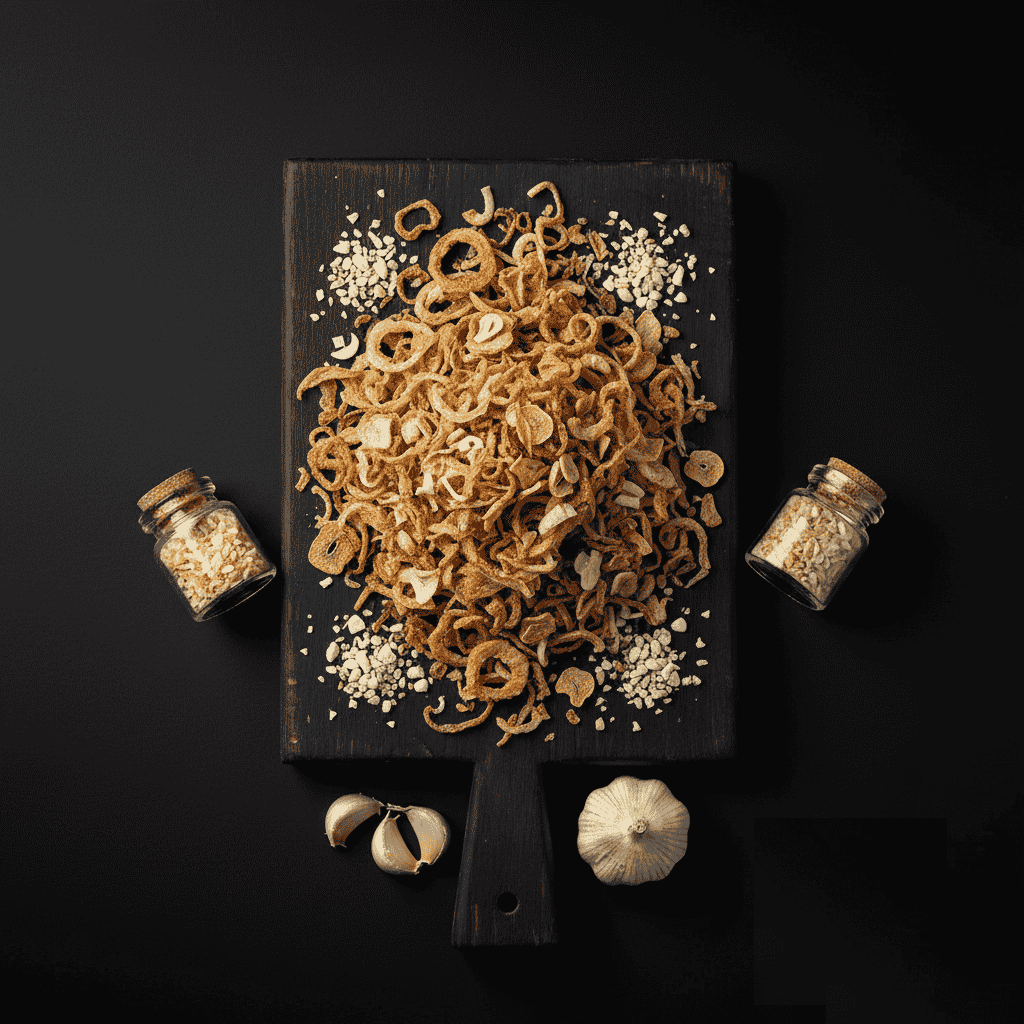
Dehydrated formats like flakes, granules, minced, and powder solve these challenges. As a result, they are now core inputs in:
- Ready meals, soups, and sauces
- Seasoning blends and snack coatings
- Meat processing and plant-based proteins
- Institutional and QSR supply chains
This shift is not cyclical; it reflects structural changes in global food manufacturing economics.
Why India Is Becoming the Preferred Sourcing Origin
1. Scale and Agricultural Depth
India is among the world’s largest producers of onion and garlic, with multiple harvesting seasons across regions. This geographic diversity enables:
- Continuous raw material availability
- Reduced dependence on a single crop cycle
- Greater resilience against localized weather disruptions
For global buyers, this translates into supply continuity, a decisive advantage over smaller producing countries.
2. Established Dehydration Ecosystem
Over the past decade, India has developed dedicated dehydration clusters with:
- Automated washing, slicing, and drying lines
- Controlled temperature dehydration to preserve flavor and color
- Capability to supply multiple cut sizes and mesh specifications
Processors can source customized grades rather than adapting their formulations to supplier limitations, an increasingly important requirement for multinational food companies.
3. Cost Stability Without Compromising Functionality
While cost arbitrage alone is no longer sufficient, India continues to offer:
- Competitive conversion economics
- Lower labor intensity per output unit
- Attractive landed costs for bulk buyers
More importantly, dehydrated onion and garlic from India deliver functional equivalence i.e. flavor release, solubility, and consistency at a lower total cost of ownership.
What Global Buyers Actually Evaluate (Beyond Price)
Professional buyers no longer assess dehydrated ingredients as commodities. Procurement decisions are increasingly driven by risk-adjusted performance criteria:
- Moisture content consistency to prevent caking and microbial risk
- Granulation and particle uniformity for automated dosing
- Microbial load control (TPC, yeast, mold, pathogens)
- Residue and contaminant compliance aligned with EU and US regulations
- Batch traceability back to sourcing regions
Suppliers that cannot demonstrate control across these parameters are systematically filtered out regardless of pricing.
India’s Advantage in Meeting Compliance Expectations
India’s export-oriented dehydrated vegetable suppliers have made material progress in:
- Implementing HACCP- and GMP-aligned processes
- Segregating food-grade production lines
- Enhancing testing protocols for microbiology and residues
- Improving packaging standards for long-haul exports
While compliance expectations continue to rise, India’s ecosystem is catching up faster than many competing origins, particularly in Asia and Africa.
Dehydrated Onion & Garlic Applications: A Growing Use-Case Spectrum
The expanding demand base is not limited to traditional food segments. Increasing adoption is visible across:
- Snack manufacturers seeking uniform seasoning distribution
- Plant-based food companies requiring consistent flavor masking
- Institutional catering prioritizing ease of handling and storage
- Private-label food brands optimizing formulation repeatability
This diversification reduces demand volatility and supports long-term sourcing contracts.
Strategic Implications for Global Food Processors
For processors, sourcing dehydrated onion and garlic from India is no longer a tactical procurement decision, it is a strategic supply-chain choice.
Key implications include:
- Reduced exposure to fresh produce price shocks
- Improved production planning accuracy
- Simplified inventory and logistics management
- Greater flexibility in multi-market product formulations
Companies that lock in reliable dehydrated sourcing partnerships gain a measurable operational advantage.
Where RNG Agro Exports Fits in This Landscape
In a market increasingly defined by trust, data, and execution discipline, RNG Agro Exports positions itself not merely as a supplier, but as a long-term sourcing partner.
Its approach emphasizes:
- Direct engagement across the sourcing and processing ecosystem
- Clear specification alignment with buyer requirements
- Batch-level consistency and documentation
- Proactive coordination to ensure supply continuity
This operating model aligns with how global buyers now evaluate exporter credibility through repeatability, transparency, and risk management, not marketing claims.
Conclusion: A Structural Opportunity, Not a Passing Trend
The global shift toward dehydrated onion and garlic reflects deeper changes in food manufacturing priorities i.e. efficiency, consistency, and resilience. India’s combination of agricultural scale, processing capability, and improving compliance makes it a logical sourcing hub for this category.
For food processors and ingredient buyers, the question is no longer whether to source dehydrated onion and garlic from India, but which partners can deliver consistent quality at scale, year after year.